 EN
EN
 Chinese
 Turkish
 Indonesian
 German
 French
 Spanish
 Portuguese
 Russian
 Italian

What is the Nonwoven Industry? Market Growth, Future Demand & Investment Opportunities
Introduction: Understanding
the Nonwoven Industry
The global manufacturing
landscape is evolving rapidly, and one of the fastest-growing sectors today is
the nonwoven industry. Unlike traditional textiles that are woven or knitted,
nonwoven materials are produced by bonding fibers together using mechanical,
chemical, or thermal processes. This innovative production method enables the creation
of versatile, cost-effective, and high-performance materials suitable for a
wide range of applications.
Over the past decade, the nonwoven industry has gained significant global attention due to its efficiency, scalability, and adaptability. From healthcare to construction, automotive to agriculture, nonwoven materials have become an essential component of modern industrial production. As demand continues to rise worldwide, this sector offers strong opportunities for both new investors and established businesses.
What Makes Nonwoven Fabrics Different?
Nonwoven fabrics differ fundamentally from conventional textiles. Instead of weaving or knitting yarns, manufacturers use fibers such as polypropylene (PP), polyester (PET), viscose, and other synthetic or natural materials. These fibers are bonded using advanced technologies such as spunbond, meltblown, and needle punch processes.
This method provides several advantages. It reduces production time, lowers manufacturing costs, and allows customization based on specific performance needs such as filtration, absorbency, durability, and softness. As a result, nonwoven products are widely used in both disposable and durable applications.
Common products include face masks, surgical gowns, sanitary napkins, diapers, air filters, geotextiles, packaging materials, and industrial wipes. The versatility of nonwoven fabrics is one of the key drivers behind their rapid global adoption.
Global Nonwoven Market Growth Trends
The nonwoven market growth has been consistently strong in recent years, and projections indicate continued expansion in the coming decade. Industry reports suggest that the global nonwoven market will reach multi-billion-dollar valuation by 2030. This growth is driven by several factors, including increasing health awareness, rising demand for hygiene products, and the expansion of healthcare infrastructure. The growing use of disposable products across industries has also contributed significantly to market expansion.
Emerging economies, particularly in Asia, are playing a crucial role in this growth. Countries such as Bangladesh, India, Vietnam, and Indonesia are rapidly industrializing, creating new opportunities for nonwoven manufacturing and export.
Key Applications Driving Demand
Nonwoven materials are used across a wide range of industries, making them highly valuable and in demand. In the healthcare sector, they are essential for producing masks, surgical gowns, and other protective equipment. The COVID-19 pandemic highlighted the importance of these materials, leading to a surge in global demand. In the automotive sector, nonwoven materials are used for insulation, filtration, and interior components. In construction, they serve as geotextiles for soil stabilization and drainage systems. Agriculture uses nonwoven materials for crop protection and water conservation.
Packaging is another growing segment, where nonwoven materials are increasingly replacing traditional plastics due to their lightweight and adaptable nature. This wide range of applications ensures consistent and long-term demand.
Future Demand of the Nonwoven Industry
The future demand for the nonwoven industry is expected to grow significantly due to evolving global trends. One of the most important factors is the increasing focus on sustainability. Manufacturers are now developing biodegradable and recyclable nonwoven products to meet environmental standards and consumer expectations. Technological advancements are also contributing to industry growth. Innovations in fiber technology and production processes are enabling the creation of stronger, lighter, and more efficient materials.
In addition, global population growth, urbanization, and rising income levels are driving increased consumption of hygiene and healthcare products. These trends will continue to support strong demand for nonwoven materials in the years ahead.
Nonwoven Industry in Bangladesh: A Rising Opportunity
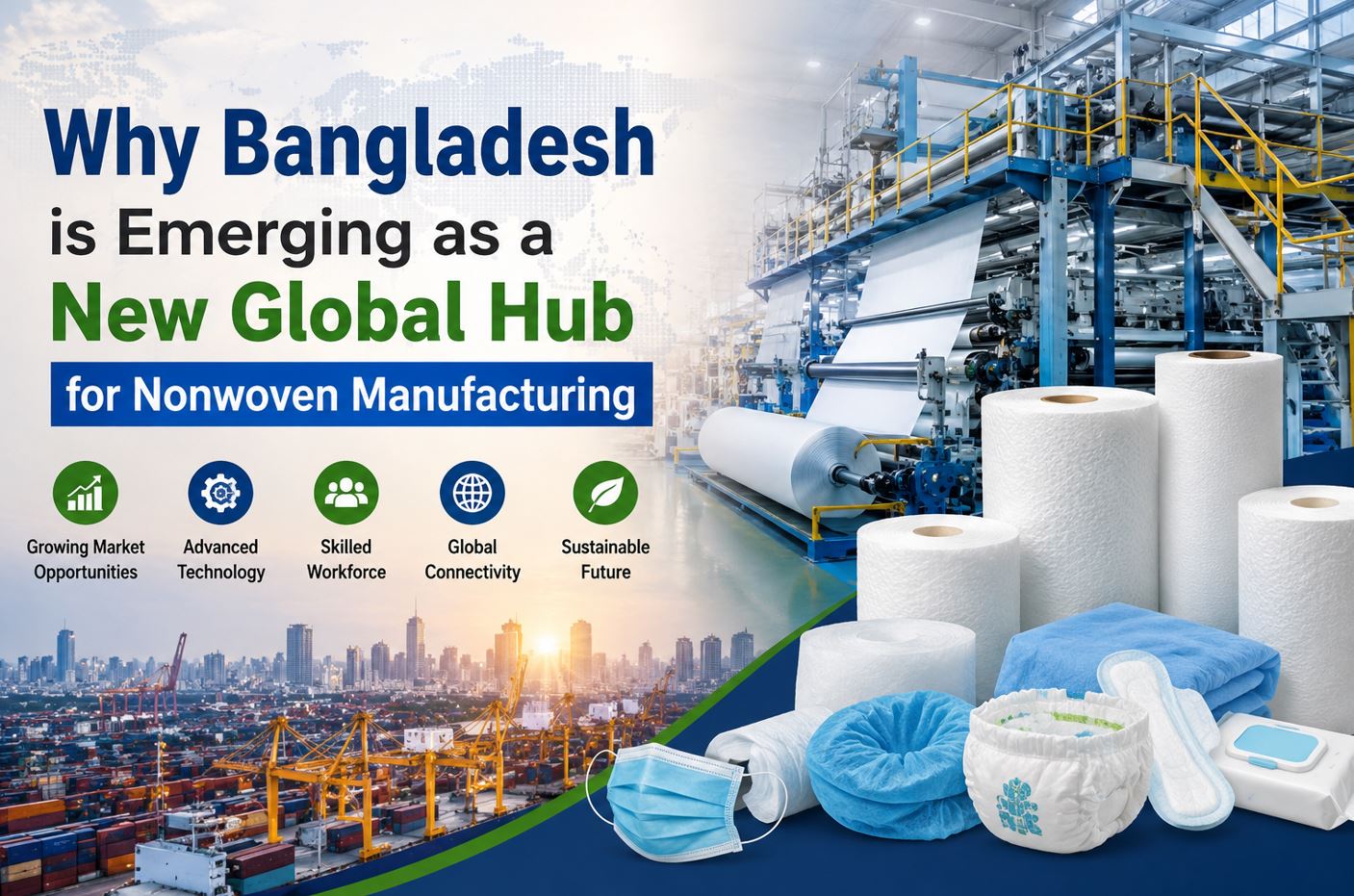
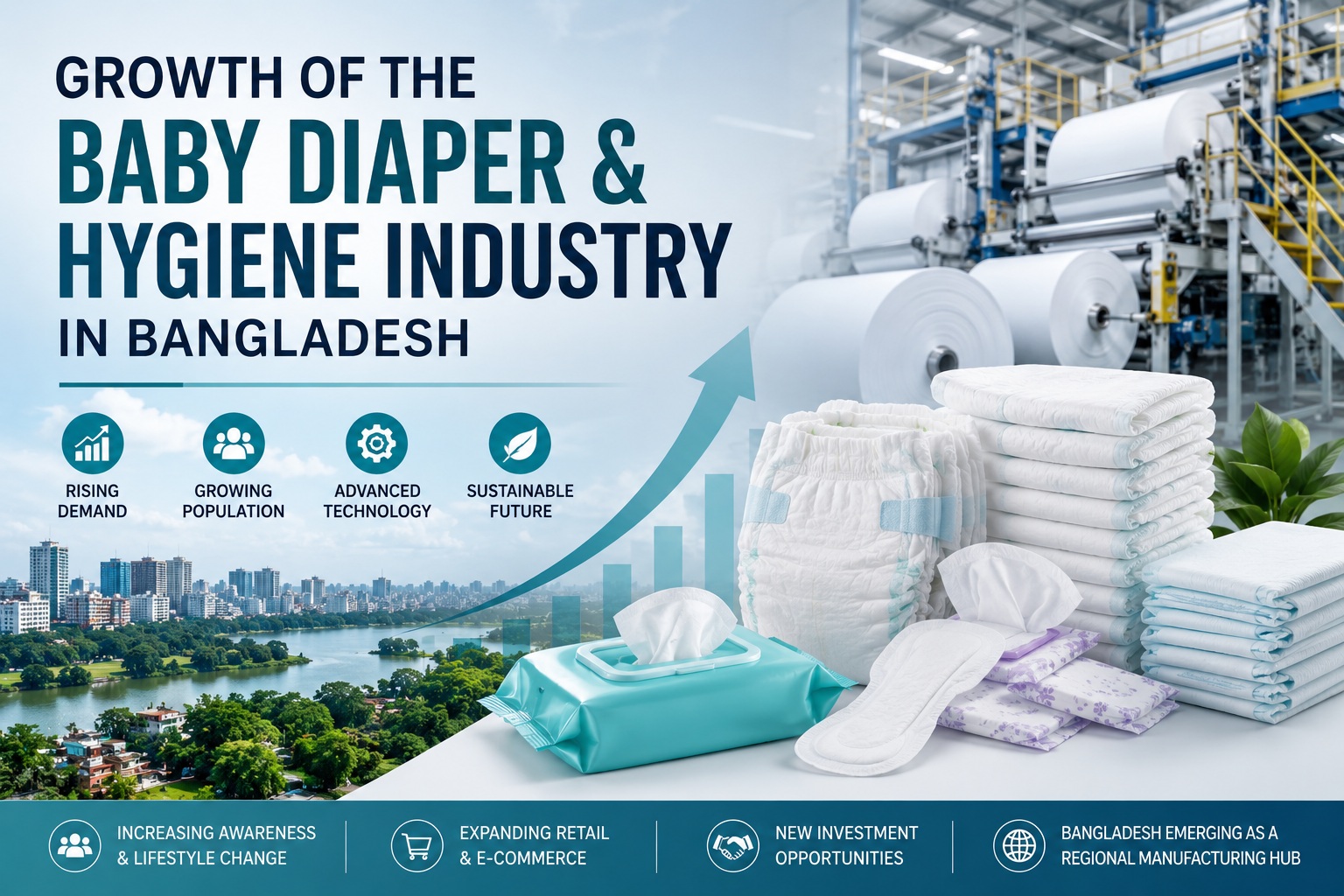
Bangladesh, already known for its strong textile and garment industry, is gradually emerging as a promising player in the nonwoven sector. Although still in a developing stage, the country has seen increasing investments in nonwoven production, particularly in medical and hygiene products. With its strategic location, competitive labor costs, and expanding industrial base, Bangladesh offers strong potential for growth. With proper government support, infrastructure development, and access to advanced technology, the country can become a key exporter in the global nonwoven market. For investors, this presents a unique opportunity to enter a growing industry at an early stage and benefit from long-term expansion.
Investment Opportunities in the Nonwoven Sector
The nonwoven industry offers attractive investment opportunities due to its scalability and diverse application areas. Technologies such as spunbond, meltblown, and needle punch allow manufacturers to produce a wide range of products for different industries. One of the key advantages is the ability to achieve relatively fast returns on investment. Since demand exists across multiple sectors, businesses can diversify their product lines and reduce risk. Investors can explore opportunities in manufacturing, export, raw material supply, or technology partnerships. Participating in international exhibitions and building global networks can further accelerate business growth.
Challenges and Considerations
Despite its strong potential, the nonwoven industry also faces certain challenges. High initial investment costs for machinery and production lines can be a barrier for new entrants. Additionally, dependence on imported raw materials can affect pricing and supply stability. There is also a need for skilled technical personnel to operate advanced machinery and maintain production quality. However, with proper training, planning, and strategic investment, these challenges can be effectively managed. Government policies, incentives, and industry collaboration will play a key role in supporting sustainable growth in this sector.
Conclusion: A Future-Ready Industry
The nonwoven industry is not just a growing sector—it is a future-ready industry with immense potential. Its wide range of applications, strong market growth, and increasing global demand make it an attractive choice for businesses and investors alike. As industries continue to evolve with a focus on efficiency, sustainability, and innovation, nonwoven materials will play an increasingly important role. For emerging economies like Bangladesh, this industry offers a powerful opportunity to diversify and strengthen industrial development. For new visitors and investors, now is the ideal time to explore the nonwoven industry and take advantage of its promising future.
Are you looking to expand your business, connect with global buyers, or invest in the fast-growing nonwoven sector?
Become an Exhibitor
Showcase your products,
technologies, and innovations to international buyers and industry
professionals.
Connect With Us
Get expert guidance,
partnership opportunities, and market insights tailored to your business.
Invest in the Future
Tap into the growing nonwoven industry and explore high-return investment opportunities in emerging markets like Bangladesh.
Contact us today to
learn more about participation, partnerships, and investment options.
About the Author